
Agriculture
At the beginning of sowing at the first outing of the field, the oxen are decorated with the flower “resa” and geranium and special words are pronounced. Before the oxen leave, water is poured on their way. If the oxen are brought to the fields during the Feast of the Half (25 days after Easter), they are not harnessed.
During sowing in the evening you should not hang yarn on reels, in order not to “wrap” the fields. In fields that have already been sown, horse or ox skulls are put on sticks, which is of protective importance for the harvest. When sowing flax, a green willow stick about one meter high is inserted into it, with special words.
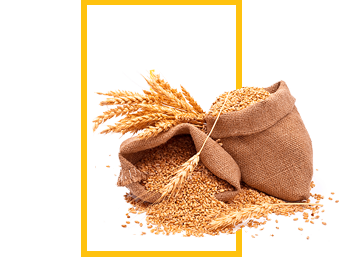
If a wheat stalk has two classes, it is a sign of wealth. When the already threshed wheat is gathered in a pile, brooms are put into it and special words are uttered. Apart from that, a large circle is made with a shovel around the pile and a special wish is pronounced. If by chance someone is surrounded in this circle, it is believed that it is not good.
When planting cucumbers, they should not be jumped over while they are small – it is believed that this makes them bitter. Fruit trees should be planted at the waning moon. If it is at another time, they will not give birth for as many years as the moon lasted until it completely diminished. It is believed that if a fruit tree blooms a second time in the summer, it means a loss and bad luck.
Livestock breeding
If a hen lays an unusually small egg, it is considered bad. There is a ritual for such an egg – it should be broken over the water far from the house, taking care not to get even the smallest part of it into the house. It is thrown into the water with special words. A hen should be hatching eggs on a waning moon to have more chicks. If it is Wednesday, Saturday and Sunday – more female chicks will hatch, if it is Monday, Tuesday, Thursday and Friday – more roosters will hatch. If a hen hatches only one chick from all the eggs she has laid, something bad will happen to this house.
After milking a cow, sheep or goat, before warming her hands on the fire, the milkmaid must wash them, as it is believed that otherwise the udder of the animal will crack. When a cow calves, a red ribbon is tied around her tail against lessons and so that her milk doesn’t run away. If fresh milk is spilled on the fire, the place should be immediately watered so as not to stop the cow’s milk. In case the milk of one cow starts to decrease, a certain ritual is performed – three bites of bread are placed under some bridge, where the cattleman with the cows passes. These bites stay under the bridge all night so that the cows pass on them twice – in the morning and in the evening. It is believed that the cow that “lured” the milk of the first one will pass from there. The bites are then given to the cow to eat and her milk is returned.
In the same way, bread “lures” milk from one cow to another. A person should go with a piece of bread in the field to the cattleman, choose a dairy cow, which is lured with bread three times. This bread is then carried to the cow, to which the milk must be drawn. It is believed that this is how the milk from a dairy cow will come to the non-dairy one.
If a housewife takes milk out of the house in the evening, she has to put three live coals in it so that the milk does not “run away” from the cow whose milk it is.
On Enyovden bee hives is put, “enyovche” – yarrow, as well as “tansy” to rotate the bees. In the first swarm of bees, a bread is kneaded as in a newborn child, but in this caseq they roll the cake three times around the table and break it the third time.