
The food of the traditional man in the past is related to agriculture and cattle breeding, with which he provided the main raw materials for its preparation. It is an important part of the material culture of the Bulgarians, through which ethnographic and social processes are clarified. Eating is a culture, a communication, a ritual. Until 1912 in Razlog they used products mostly only from their own production. Gradually, men began to visit larger cities, from where they brought products that are not grown in villages or smaller cities. Around 1920, there was a shop in every village, from which women most often bought salt, sugar (if there was a sick person at home or for a holiday) and olive oil for Lent. The traditional cuisine in the Razlog region has preserved specific local dishes prepared for weekdays and holidays. It bears the typical features of mountain cattle-breeding towns, but it has inevitably left its mark on the Christian calendar. The seasonality in dishes and food consumption is clearly expressed. Throughout the agricultural year, the locals are diligently preparing for the severe and long Winter, as it is in this area. Due to the colorful local dialect, the dishes from this region have characteristic names, such as “nafpavok” – dried appetizer of minced pork, which is made for centuries in the Razlog valley.
Everyday Dishes
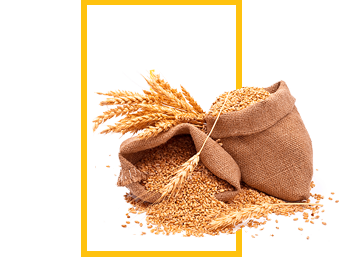
The main daily foods in the past are bread and pasta – in one kneading in the past they made between 7 and 15 loaves of bread, as the household was large. Until the 1940s, bread was baked in a “podnitsa” – a round pan/tray made of clay, which was preheated with hot sticks or cobs of corn. The pottery was usually made on the feast of St. Jeremiah (1/14 May), when women ritually went for clay, which they kneaded and made from it. After drying them for 2-3 months, they started using them. The trays were of different sizes – large for weddings and holidays and smaller for everyday use. After the prepared bread or pie was placed on the tray, it was covered with a “top” bought by master ironworkers. Hot coals were sprinkled on the top and this is how the bread was baked. Bread was baked in the past and in ovens, as they had in their homes, but somewhere they were also common to the neighborhood, built by all with common funds and labor.
“Shupla”, a type of flat bread made from eggs, butter, flour and shredded cheese, has become an everyday dish today. Shupla is also prepared in other places in the Blagoevgrad region, as well as in parts of the Pazardzhik region (Velingrad), but the Razlog “Shupla” is especially popular and liked. In the past, it was associated with funerals and memorials – it was only prepared for them. Shupla, for example, was never brought to a wedding and if it happened by chance, it was considered a bad sign. Today it is prepared in every home and at any time and is among the favorite everyday foods in Razlog and Razlog region.
A particularly revered everyday dish in the region is cornmeal porridge, here called “barcade” or “bracadan”. There are two ways to prepare it – in the first the flour is put in hot salted water, pierced in 4-5 places and left to boil over low heat until cooked, and in the second – after putting the flour in the water, it is mixed with a wooden rolling pin. The finished porridge is taken out in “gramudi” (balls) with a spoon dipped in fat, honey or cabbage juice. Somewhere they turn it all in a tray or spread it in a thin layer. The most important thing is what is put on the porridge – most often melted fat and cheese or cottage cheese, but also slices of bacon, blood sausage, sausage and others. In the past (before 1900) the porridge was served with blanched walnuts and pickled tomatoes, as well as crushed hot peppers. Before corn entered our lands, porridge was made from millet flour.


In the absence of other food, especially in Winter, the women boiled rye, wheat, or cornmeal into a thick porridge, poured fat and fresh milk on it, and crumbled bread into it — this was called popara. It is eaten in Winter with finely chopped sauerkraut, and in Summer – with cottage cheese. In the Razlog region they put neck and pieces of flour at the same time as the flour.
Pumpkin was often grated on a dough mixed with corn flour and water and baked in a greased pan. It is called “burek” or “borek” and replaced a cooked dish. Today, burek is also made with pumpkin and its recipe is slightly updated, but in essence it is a traditional local food.
Even today in Razlog bread and pasta remain among the most important foods, but they also have their more modern dimensions – such an example is the bread “Sun”
“Pitka Sluntse”, which is especially beautiful and is prepared both in everyday life and for the holidays.
In the past in Razlog meat was used as a staple food mainly in Winter. In fact, there is evidence that there was an unwritten rule – pork is eaten in Winter, lamb or goat in Spring, and beef and chicken – in Autumn. Pigs were raised in almost every house. Around 1920, merchants opened butchers to buy meat from. This trade developed rapidly, as it was not necessary to slaughter a whole sheep or calf in order to eat meat on a holiday. In the mountain villages in the fall they slaughtered sheep and made “pastarma” from the meat – salted and dried. Today, other types of dried sausages are produced in the region – for example, “Babichka”, similar but larger than “Starets” and sujuk (shuzhuk), which is made from minced pork with traditional spices (cumin, fenugreek, savory), blood sausage etc. Particularly specific is the local specialty “nafpavok”, which is said that its specific taste comes only from the climate in Razlog. It is prepared from the best pork, placed in the stomach or bladder of the animal, and its main spice is cumin. It is made in December, dried until April, and consumed between May and October.
Until the beginning of the 20th century, many types of vegetables were not grown in Razlog – only beets, colerape, cabbage (also called “kazel”), leeks and garlic. Around 1912 in the region in many villages began to plant potatoes – “kombari” or “kombi”, which soon became the main food of the population. At that time, red peppers, spinach and tomatoes were transferred and planted, around 1920 – eggplants, and by 1930 – carrots. It is mainly red peppers (larger) that are used to make homemade lutenica, called ‘penjur’ (4), which is one of the most popular everyday foods in the region. It is prepared as a Winter food and can be eaten all year round.

Roasted red or green peppers have often replaced cooked food during hard field work. People only added crushed garlic and ate them bread. Whole peppers in some villages are put on beans and other legumes, as well as on various meat dishes.
From peppers and green tomatoes, and after 1930 with cabbage and carrots, in Razlog in the Autumn every housewife makes raw pickles (“razsol”) – only with water and salt. It is believed that the preparation must be on the good days of the week (Monday, Tuesday and Thursday). The person who makes it puts on himself geraniums in order to be healthy. It is important to “pour” the brine several times. During Lent, the “razsol” is eaten with bread.
Everywhere in the region in the past, people dried fruits in the sun. Then they boiled them with water and ate them with bread – this was a daily food for the poorer people before the 1940s, but the dish is also present at the festive table when it is lean – especially on Christmas Eve.

Milk and dairy products were and still are an important part of the daily diet of the Razlog family – among them are buttermilk, freshly beaten or melted butter, yogurt, cheese and more. The reason for this is that one of the main livelihoods in the region in the past was sheep breeding. In most villages in the region in the past, the cheese was made from raw milk.

Until the middle of the 20th century, an old way of making cheese existed in Southwestern Bulgaria. A well-washed and very hot stone is placed in the vessel in which the cheese is prepared, around which the cheese is collected. In Razlog until the 1930s the practice was a little different – hot water was poured into unboiled milk and mixed with a stick.
Holiday Dishes

In Razlog and Razlog, on calendar, village and family holidays and customs, certain foods are prepared, which in the past were an important part of the ritual. Through this food and a number of actions before and during the meal, the people expressed a wish for a good harvest and believed that in this way they ensure fertility throughout the year and health of the family. Although in essence traditional nutrition bears the hallmarks of folklore culture, it is largely determined by the regime of church-calendar fasts in Orthodox Christianity: fasting excludes all foods of animal origin – not only meat but also milk, dairy products and eggs. The one-day fasts are: every Wednesday and Friday, the day before the feast of Jordan (Epiphany) (January 5), the feast of the Cross (September 14) and the day of St. John (August 29). The longer fasts are Easter Fast, the fast until St. Peter`s Day (June 29), the fast from August 1 to 14, and Christmas Lent. On the great Christian holidays, which fall during Lent, fish is allowed: on the Annunciation (March 25), Tsvetnitsa, Eniovden (June 24) and St. Nicholas’ Day (December 6). Wine and oil are allowed on some days when fasting is not so strict, but on other days – both are prohibited. Fasting is not only associated with abstinence from food and bodily purification of man, but also with spiritual purification – from unclean thoughts and bad deeds. The table of each of the traditional Razlog calendar holidays is lean or meat, depending on when the holiday is.
Lean Foods

The richest lean meal in Razlog was, and still is, that on Christmas Eve (December 24). In the region, this dinner is called “nayadka” and on the table should be put everything that farmers have produced and is typical for this time of year. The dishes are an odd number (7, 9, and sometimes 12), among them are necessarily present sarmi, tselovarki; beans; sarmi with beet leaves; oshav, for which people dry their fruit all year round; dried green beans; boiled and raw wheat, onions, garlic, walnuts, honey, lean pies such as cabbage (with cabbage or leeks), etc.
When everyone sat down at the table, an incense was put, and a prayer was read. A pumpkin pie was made in Razlog for Christmas Eve. A piece of it and a full glass of wine were placed in front of the icon of the Holy Mother of God. The next day the children were given some of the wine and pumpkin pie.

The food on table was also lean on the day before Jordan’s Day (Voditsi) (January 6), and men and women should not “gather”. On the table is placed a bread of wheat flour mixed with millet flour or corn flour, beans, potatoes with sauerkraut, as well as typical for Razlog sarmi with leeks and mushrooms and others. It is believed that after the supper on the night before the holiday, the sky opens around midnight. If one can see it, what one wishes will come true. Jordan’s Day puts an end to the so-called Dirty Days, which begin at Christmas.

During the longest strict fasts – Christmas and Lent, in Razlog was made lean banitsa. Today it is prepared at any time and is a favorite dish in the region.
The holiday with which the real Easter fast begins is Sirni Zagovezni. It is mobile and depends on Easter – it falls on a Sunday, six weeks before Easter. For the last time cheese, milk, eggs ьие еьшех. On this day, people bring wine and banitsa to relatives and ask for forgiveness, and the newlyweds must visit their godparents. An interesting local pie is zelnik with leeks, bulgur, cheese and beet leaves. On the evening of the holiday, the custom of “amkane” is made – white halva is tied with a long thread on a rolling pin, swung, and children and young people try to catch the halva without their hands, only with their mouths – it is said that “amkat”. Then the thread is ignited and it is seen if it will burn completely. If it happens to burn, it means that the year will be good and happy for the family.

Интересна местна баница е зелникът с праз, булгур, сирене и листа от цвекло.Вечертана Сирница се прави обичаят „амкане“ – бяла халва се връзва с дълъг конец на точилка, размахва се, а децата и младите се опитват да уловят халвата без ръце, само с уста – казва се, че „амкат“.След това конецът се запалва и се гледа дали ще изгори докрай. Ако се случи да изгори, това означава, че годината ще е добра и щастлива за семейството.
In some Razlog settlements for Blagovets (March 25) a “barcade” (kachamak) was made, but with pieces of fish, because only on this day (and on Tsvetnitsa) during Lent it is allowed to eat fish.
Meat Dishes

Along with lean foods, Razlog is known for a variety of local meat dishes associated with specific calendar holidays and customs. The Christmas (Christmas) table on December 25 is always with meat. Pigs are slaughtered around the holiday and this ritual in Razlog (and in a wider area) is called “pig wedding”. Fresh meat is used to prepare the local dishes klopanitsa and traan, as well as the popular pork kavarma. Various dishes are prepared from pork, including the local razlozhka bohcha and banitsa with meat and beets. The meals on the three days of Christmas (December 25, 26 and 27) are especially rich, it is a time to visit relatives, godparents and relatives, and in the evening on the square there was a big holiday dance.

Another holiday on which meat dishes are consumed is Surva (January 1). Before that, however, on the evening before the holiday, called in the region “Nayadka” (as it is also called Christmas Eve), a ritual bread “Bogovitsa” and banitsa were made. The oldest member of the family put an incense on the table as and on Christmas Eve. On January 1, in almost all villages in the Razlog region, pihtya (pacha) is boiled from a pig’s head “to make the new year fruitful”. Part of Surva’s ritual food is boiled beets – lean or with blood sausage. On this day, meat dishes are prepared- razlozhka kapama and razlozhka fudula. Kapama is especially preferred throughout the region, it is always present at the table and at Christmas, and is prepared not only on holidays. Interestingly, kapama was originally prepared from venison, fat and wine in a clay pot, the lid of which was smeared with dough so that the dish could boil for a long time over low heat, most often buried in the ashes of the fireplace. In some villages it was prepared from chicken meat, pieces of blood sausage, beets, bulgur, bacon and spices. After the 1930s, pieces of pork, sarma, cabbage, rice, etc. were added. The modern kapama is especially rich and is a representative dish for the region.
In the period around and after Christmas and Surva, mainly in Winter, a typical dish of the region dried green beans with legs and ears was consumed. The beans were picked at a specific time of the year and after that left to dry. As Winter food in the past, bacon, pork packs and ears, etc., were placed in very salted clay jars, and so they were stored for the whole Winter. The dried green beans were boiled for a long time, and then garlic, the sour ears and legs were added and the meal was cooked again for hours.


And while on Christmas and Surva meat foods contain mainly pork and beef (with beef is for example the dish Chomlek), on Babinden (January 8/21) boiled or roasted chicken is prepared, as well as fresh bread and banitsa. They are brought by the brides to the women whoe helped them have given birth for holiday feast. The Razlog banitsa with rice is typical for the region.
The consumption of lamb is typical for the Easter and St. George’s Day festivities. Easter is expected long and anxiously by young and old. It marks the end of Lent, the longest and heaviest of the year, and a time for plentiful meals, visits to relatives and friends, and merriment. Almost everywhere a roasted Easter lamb is made with the traditional „drob sarma”, prepared from lamb trifles with rice and spices. The local version in Razlog is lamb stuffed with bulgur (24). Roast lamb is also made for the other very big Spring holiday – St. George’s Day. For this day, a sacrificial lamb is ritually slaughtered, most often the first male lamb born during the year. It is usually baked whole in an oven and then carried to a church. In the past, a village meal was held outside the village, which a priest smoked with incense. Along with the national celebration, a special dish is made in honor of the saint in the church of St. George in Razlog. A sheep or ram is usually slaughtered and boiled. After 1920, in addition to meat and broth, bulgur, rice and other vegetables began to be added to the dish. In the Razlog church, dedicated to St. George, the preparation of this dish has a long tradition and continues to this day – it is cooked in large pots, consecrated and distributed for health and blessing. For St. George’s Day in Razlog the hosts also make a festive banitsa with Turkish delight.

From family rituals and customs to this day is preserved the practice of preparing a sweet bread when a child starts walking – “proshtapulka”. Relatives, mothers with children and others are invited to the house for a festive meal. The bread, which is kneaded by a woman with two living parents, must be smeared with honey to make the child’s life sweet. It is distributed to the visiting children. Taking the pieces, they have to run, so that and the child can run and to easily get married. The ritual is also made for the purpose of divining the child’s future profession – the child chooses from various subjects that in the past were very specific and were related to the crafts that people in the region practiced. Today children choose from objects symbolizing different professions.