
“Pitka Sluntse” for Babinden. In Razlog and Razlog region, Babinden is celebrated in honor of the grandmother-midwife. Traditionally, bread is present on the table, a symbol of abundance, fertility, health and goodness. Learn more about the holiday and the traditional recipe.
Babinden is celebrated on January 8 (January 21 in the old style) and is dedicated to midwives – those who help with childbirth and care for the health of the baby and the mother. According to tradition, the midwive must be an elderly woman who will no longer give birth, then she is considered ritually “pure” and has the right to be a midwife. The midwife has traditional knowledge and magical techniques to facilitate and accelerate childbirth. In the past, with herbal decoctions, massages and special rituals, she helped the baby to come out into the world, and then cut the umbilical cord with a knife or sickle. She had to protect the newborn from evil forces and “bad eyes”.
In Razlog and Razlog region Babinden is celebrated in honor of the grandmother-midwife, but also for all children born between the past and this Babinden – they are called “babincheta”. They are dressed in the latest clothes and their parents take them to church, then invite guests for lunch. All day their home is open to guests who are guests.
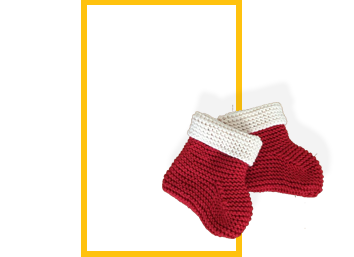
Before noon on Babinden, the daughter-in-law and mother-in-law dressed festively to perform the ritual watering of the grandmother-midwife in her home. She greets her guests at the door, stands up to her full height and rises on her toes to make the “babinche” grow like a pine if he is a boy, and slender like an aspen if she is a girl. The grandmother-midwife rolls up her sleeves to the elbows and the child’s mother waters the grandmother with a crondir (a traditional ceramic vessel for wine or rakia) over a copper basin or clay pot. Raising the crondir high, the mother says traditional words. She gives her a soap and a towel. She also leaves her a juzche (an old kind of small bottle) with rakia. The grandmother-midwife gives each child a pair of knitted white woolen socks. In the village of Dobarsko they weave red thread in the socks with a wish for the child to be healthy.
After watering, the grandmother-midwife wipes her hands in the new towel. In Dobarsko, after washing her hands, the grandmother-midwife raises three times for health every woman who came to congratulate her.
In the afternoon, mothers and midwives from all neighborhoods of Razlog go to the town square to dance “Babino Horo” and this is a tradition typical of the region. At first, everyone dances, but then only the grandmothers-midwives remain, as well as grandmothers with their grandchildren, who are put in special slings. The dance is without instrumental accompaniment, the grandmothers sing traditional local songs, which are danced.
In the past, midwives arranged a common table for which each woman brought bread, pie, boiled chicken or an appetizer. The gathering was attended only by women and was forbidden for men.